Oral surgery patients search differently than general dental patients. They’re often dealing with wisdom teeth pain, an urgent extraction, or a referral for implants or jaw surgery. Fear and urgency are the two emotions your website has to manage well — and most oral surgery sites ignore both.
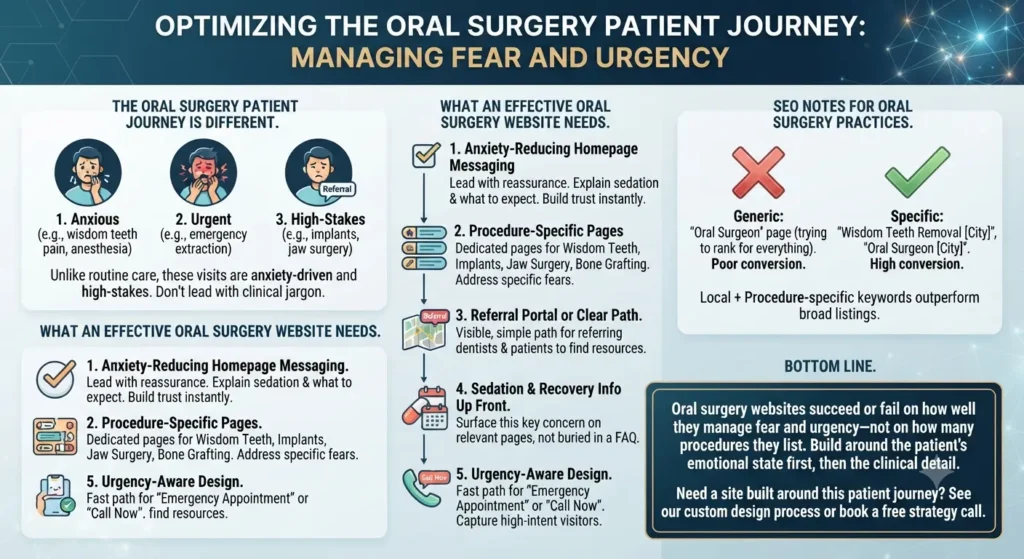
The Oral Surgery Patient Journey Is Different
Unlike routine dental care, oral surgery visits are often one-time, high-stakes, and anxiety-driven. Patients frequently arrive already nervous about anesthesia, recovery time, or pain. A website that leads with clinical jargon or a wall of procedure names makes this worse, not better.
What an Effective Oral Surgery Website Needs
1. Anxiety-reducing homepage messaging Lead with reassurance — sedation options, what to expect, and a clear sense that the practice understands patients are nervous. This builds trust before a single procedure page is read.
2. Procedure-specific pages, not a single “services” list Wisdom teeth removal, dental implants, jaw surgery, and bone grafting each have different concerns and search terms. Dedicated pages let you address specific fears and questions for each.
3. Referral portal or clear referring-dentist path A large share of oral surgery patients arrive via referral. A visible, simple path for referring dentists (and their patients) to find what they need reduces drop-off significantly.
4. Sedation and recovery information up front This is consistently the most-searched concern for oral surgery patients. Burying it in a FAQ instead of surfacing it on relevant procedure pages is a missed conversion opportunity.
5. Urgency-aware design for emergency cases Some visitors need an extraction today. A clear, fast path to “emergency appointment” or a direct call button — not buried three clicks deep — captures these high-intent visitors before they leave for a competitor.
SEO Notes for Oral Surgery Practices
Local + procedure-specific keywords (“wisdom teeth removal [city],” “oral surgeon [city]”) convert far better than a single broad “oral surgery” page trying to rank for everything. City and procedure combinations, built as individual pages, consistently outperform generic service listings.
Bottom Line
Oral surgery websites succeed or fail on how well they manage fear and urgency — not on how many procedures they list. Build around the patient’s emotional state first, then the clinical detail.
Need a site built around this patient journey? See our custom design process or book a free strategy call.